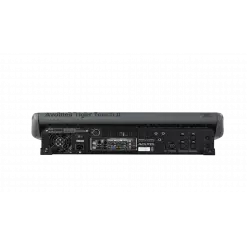
AVOTIGERTOUCH2
AVOLITES
discontinued

Tiger Touch II

ORDER CODE: AVOTIGERTOUCH2

Now boasting a 100% brighter screen, increased processing power, and faster graphics engine, the Tiger Touch II is the most specified Titan console.
The Avolites Tiger Touch II represents the perfect combination of power and portability. This third-generation console is packed with enough power for complex shows, yet small and light enough to fly in standard hold luggage. The console features SMPTE timecode support and a redesigned button layout to match the entire Titan range.
In order to update the console to version 12 of the Titan, it will be necessary to purchase and install a USB dongle called AVOKEY.
Serial 02006 - 03065
You need to order:
- AVOKEYINT 
- 1x5 way to USB-A Cable (spare part code 8000-6102)
Once you've received your AVOKEYINT and 1x5 way to USB-A Cable, you will be required to connect the USB-A Cable to the motherboard. This cable will provide an additional USB port for the AvoKey.
Click here to view the installation guide: https://www.avolites.com/Portals/0/Downloads/Manuals/AvoKey/8000-6102 TT2-2-3K AVOKEY upgrade with 1808-0028.pdf
 
Serial 03066 - 4020

You need to order only AVOKEYINT
Once you've received your AVOKEYINT, you will be required to connect this directly to the available (Blue) USB port inside the console (on the motherboard).
Click here to view the installation guide: https://www.avolites.com/Portals/0/Downloads/Manuals/AvoKey/8000-6101 TT2 AVOKEY no cable.pdf
 
Serial 04021 - 05001
You need to order only AVOKEYINT
Once you've received your AVOKEYINT, you will be required to connect this directly to the available (Red) USB port inside the console (on the motherboard).
 
Serial 5001 and above include a factory fitted AvoKey.
Therefore, you do not need to purchase an AvoKey. buying equity in a business

Main features:

  • 10 pageable playbacks, 60 pages.
  • 10 static playbacks - perfect for instant access.
  • 100% brighter 15.6" screen.
  • Three metal shaft optical encoders offering luxurious precision.
  • MIDI support for MIDI Notes and MIDI Timecode.
  • Built in UPS.
  • 4 physical DMX outputs, up to 16 over ArtNet or sACN - 8192 channels.
  • Supports Titan Network Processors for DMX expansion up to 64 universes.
  • Trigger inputs.
  • Dual Ethernet port.
  • Expand your control surface through wings, DMX In or MIDI.
  • Dedicated cue stack control.
  • Support for external touch screen.
  • 10 programmable executor buttons.
  • Conveniently accessible front loading USB.
  • Dimensions (WxHxP): 675x435x147 mm (console only); 750x620x300 mm (console in flight case).
  • Weight: 15.2 kg (console only); 29.40 kg (console in flight case); 31.70 kg (console packed in flight case).
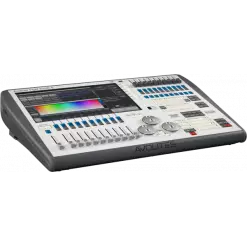
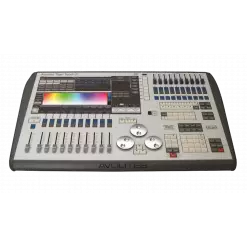
PHOTO GALLERY

Technical specifications

Versions

Accessories & Related Products

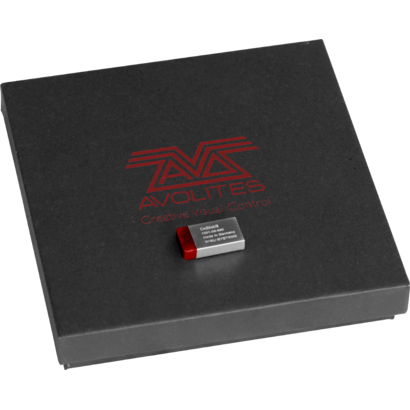
AVOKEYINT
AVOKEYINT
(Optional)
AvoKey internal (red)
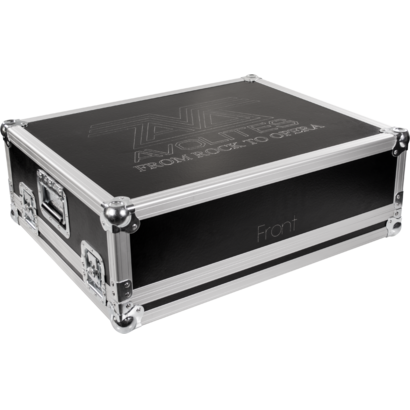
AVOTT2FC
AVOTT2FC
(Optional)
Avolites TigerTouch II Case

Buying Equity In A | Business

In conclusion, buying equity is a sophisticated exercise in risk management and fundamental analysis. While it exposes the investor to the perils of business failure and market fluctuations, it remains one of the most effective vehicles for participating in economic growth. Successful equity investment demands a disciplined synthesis of quantitative valuation, an understanding of competitive dynamics, and the patience to allow a company’s long-term strategy to bear fruit.

AI responses may include mistakes. For financial advice, consult a professional. Learn more

Beyond the financial mechanics, buying equity involves an assessment of control and influence. In private equity or venture capital contexts, an equity stake often comes with board seats or voting rights that allow the investor to shape corporate strategy. In public markets, while individual shareholders have less direct influence, the collective power of equity holders ensures management remains accountable through proxy voting and shareholder activism. This alignment of interests—where management is incentivized to create value for the owners—is a hallmark of modern corporate capitalism.

The primary motivation for buying equity is the opportunity for capital appreciation and dividend income. As a business expands its operations, increases its market share, or improves its margins, the intrinsic value of its shares typically rises. Furthermore, equity owners often benefit from a claim on the company’s earnings, distributed as dividends. This dual-pronged return profile makes equity a cornerstone of long-term wealth accumulation. However, because equity holders are the last to be paid in the event of liquidation—falling behind secured and unsecured creditors—the risk of total capital loss is a persistent reality.

The following essay examines the strategic considerations, risks, and economic implications of acquiring equity in a business. The Strategic Value and Risk of Business Equity Acquisition

Info Request

In conclusion, buying equity is a sophisticated exercise in risk management and fundamental analysis. While it exposes the investor to the perils of business failure and market fluctuations, it remains one of the most effective vehicles for participating in economic growth. Successful equity investment demands a disciplined synthesis of quantitative valuation, an understanding of competitive dynamics, and the patience to allow a company’s long-term strategy to bear fruit.

AI responses may include mistakes. For financial advice, consult a professional. Learn more

Beyond the financial mechanics, buying equity involves an assessment of control and influence. In private equity or venture capital contexts, an equity stake often comes with board seats or voting rights that allow the investor to shape corporate strategy. In public markets, while individual shareholders have less direct influence, the collective power of equity holders ensures management remains accountable through proxy voting and shareholder activism. This alignment of interests—where management is incentivized to create value for the owners—is a hallmark of modern corporate capitalism.

The primary motivation for buying equity is the opportunity for capital appreciation and dividend income. As a business expands its operations, increases its market share, or improves its margins, the intrinsic value of its shares typically rises. Furthermore, equity owners often benefit from a claim on the company’s earnings, distributed as dividends. This dual-pronged return profile makes equity a cornerstone of long-term wealth accumulation. However, because equity holders are the last to be paid in the event of liquidation—falling behind secured and unsecured creditors—the risk of total capital loss is a persistent reality.

The following essay examines the strategic considerations, risks, and economic implications of acquiring equity in a business. The Strategic Value and Risk of Business Equity Acquisition


Subscribe to our Newsletter

Loading...