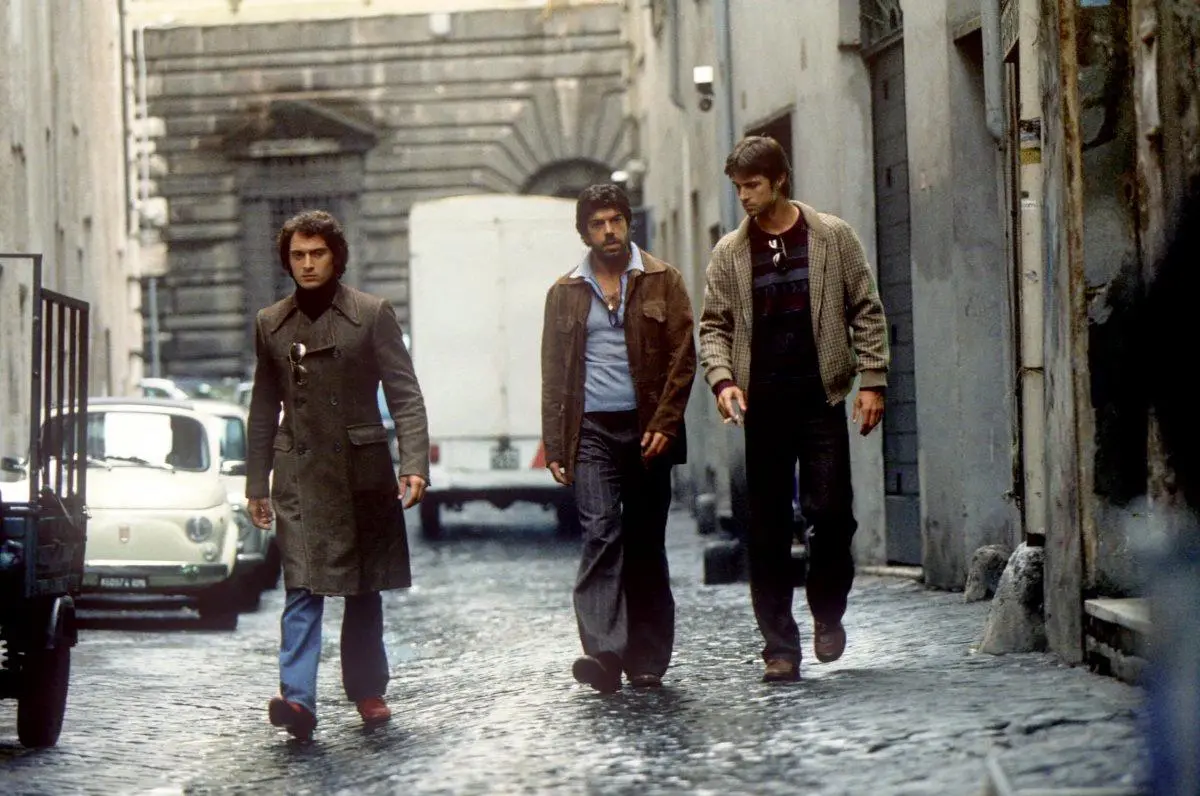
Four kids entertain themselves with daring adventures: during one of these, they steal a car, run over a policeman and escape to their hideout, a caravan on the dunes of Capocotta beach. Later in life, the four form a criminal gang with the aim of conquering Rome. Most of the film was shot in the neighbourhoods of Magliana, Garbatella, Trastevere and Monteverde.
The external façade of Patrizia’s brothel is villino Cirini, in via Ugo Bassi, Monteverde. Freddo’s brother and Roberta live in the same housing estate in Garbatella. The house of Terribile, which later becomes Lebanese’s, is Villa dell’Olgiata 2, in the area of Olgiata north of Rome, while Freddo lives in via Giuseppe Acerbi, in the Ostiense neighbourhood, not far from where Roberta’s car blows up in via del Commercio, in the shadow of the Gazometro.
Terribile is executed on the steps of Trinità dei Monti. Leaning on the rail overlooking the archaeologial ruins in largo Argentina, Lebanese and Carenza talk about the kidnap of Aldo Moro. The Church of Sant’Agostino where Roberta shows Freddo Caravaggio’s Madonna dei Pellegrini is the location for several key scenes in the film. Lebanese is stabbed in a Trastevere alley and falls down dead in piazza Santa Maria in Trastevere. The hunt for Gemito ends in a seafront villa in Marina di Ardea-Tor San Lorenzo, on the city’s southern shoreline, where he is murdered. Forced to hide, Freddo finds refuge in a farmhouse in Vicarello, hamlet of Bracciano. File: Tetris.Effect.Connected.v1.3.2.Incl.ALL.D...
A scene which opens over the altare della Patria and the Fori Imperiali introduces the end of the investigation into Aldo Moro’s kidnap, followed by repertory images of the discovery of his body in via Caetani. The many real events included in the fictional tale include the bomb attack at the station of Bologna at 10:25 am, 2 August 1980: in the film, both Nero and Freddo are in Piazzale delle Medaglie d’Oro several seconds before the bomb explodes.
Commissioner Scaloja, who is investigating the gang, takes a fancy to Patrizia: they stroll near the Odescalchi Castle in Ladispoli. He finds out if his feelings are reciprocated when, several scenes later, he finds her in a state of confusion near Castel Sant’Angelo. The mention of "v1
Four kids entertain themselves with daring adventures: during one of these, they steal a car, run over a policeman and escape to their hideout, a caravan on the dunes of Capocotta beach. Later in life, the four form a criminal gang with the aim of conquering Rome. Most of the film was shot in the neighbourhoods of Magliana, Garbatella, Trastevere and Monteverde.
The external façade of Patrizia’s brothel is villino Cirini, in via Ugo Bassi, Monteverde. Freddo’s brother and Roberta live in the same housing estate in Garbatella. The house of Terribile, which later becomes Lebanese’s, is Villa dell’Olgiata 2, in the area of Olgiata north of Rome, while Freddo lives in via Giuseppe Acerbi, in the Ostiense neighbourhood, not far from where Roberta’s car blows up in via del Commercio, in the shadow of the Gazometro. In the context of digital archiving, such files
Terribile is executed on the steps of Trinità dei Monti. Leaning on the rail overlooking the archaeologial ruins in largo Argentina, Lebanese and Carenza talk about the kidnap of Aldo Moro. The Church of Sant’Agostino where Roberta shows Freddo Caravaggio’s Madonna dei Pellegrini is the location for several key scenes in the film. Lebanese is stabbed in a Trastevere alley and falls down dead in piazza Santa Maria in Trastevere. The hunt for Gemito ends in a seafront villa in Marina di Ardea-Tor San Lorenzo, on the city’s southern shoreline, where he is murdered. Forced to hide, Freddo finds refuge in a farmhouse in Vicarello, hamlet of Bracciano.
A scene which opens over the altare della Patria and the Fori Imperiali introduces the end of the investigation into Aldo Moro’s kidnap, followed by repertory images of the discovery of his body in via Caetani. The many real events included in the fictional tale include the bomb attack at the station of Bologna at 10:25 am, 2 August 1980: in the film, both Nero and Freddo are in Piazzale delle Medaglie d’Oro several seconds before the bomb explodes.
Commissioner Scaloja, who is investigating the gang, takes a fancy to Patrizia: they stroll near the Odescalchi Castle in Ladispoli. He finds out if his feelings are reciprocated when, several scenes later, he finds her in a state of confusion near Castel Sant’Angelo.
Copyright: Warner Bros
Claudio Santamaria, Pierfrancesco Favino, Kim Rossi Stuart
Copyright: Warner Bros
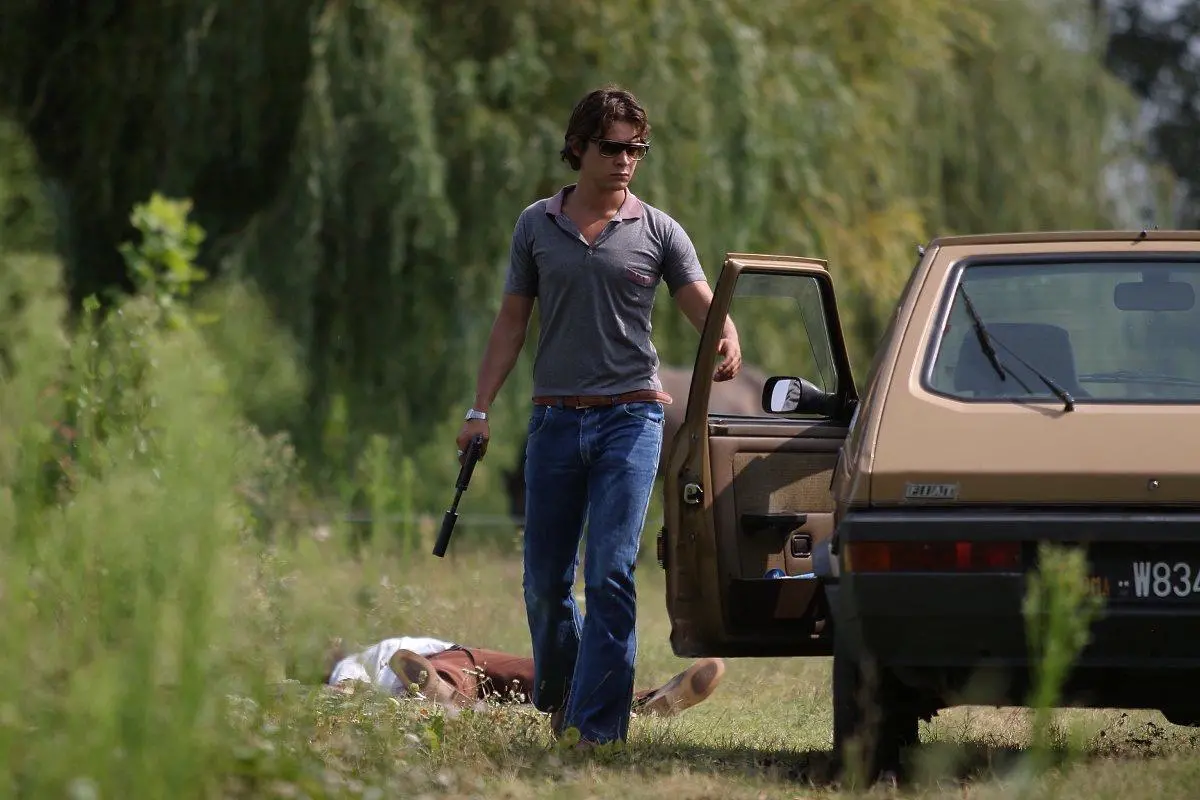
Riccardo Scamarcio
Copyright: Warner Bros
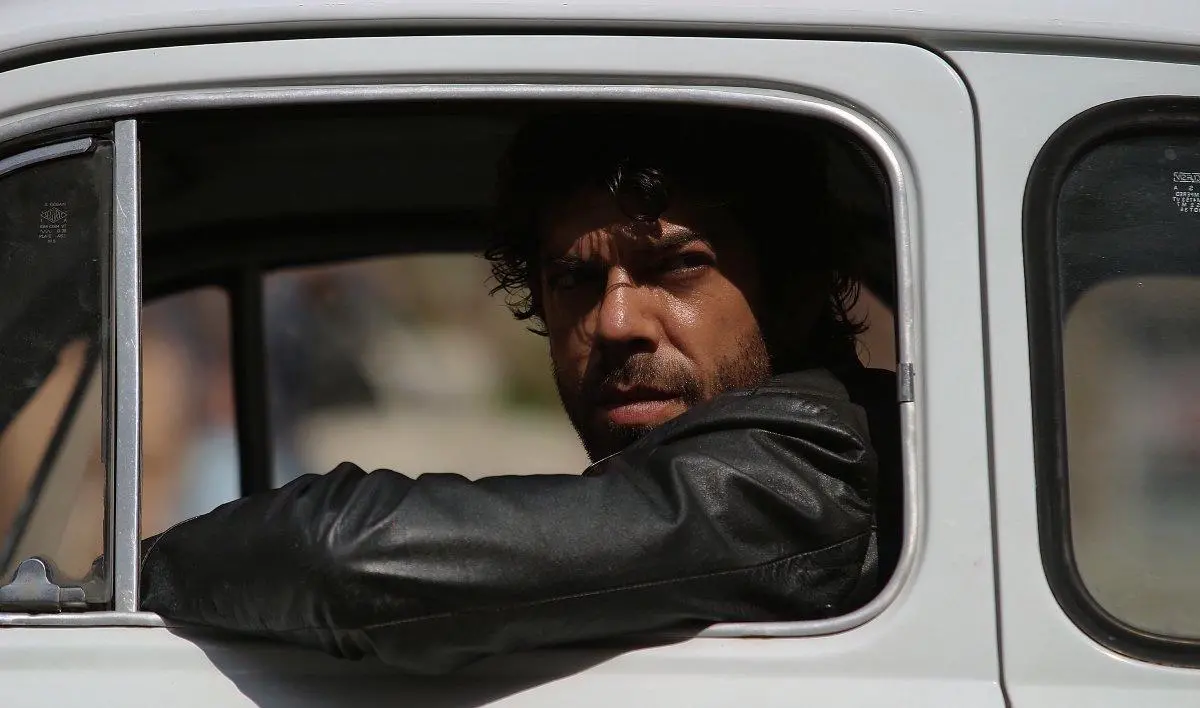
Pierfrancesco Favino
Copyright: Warner Bros
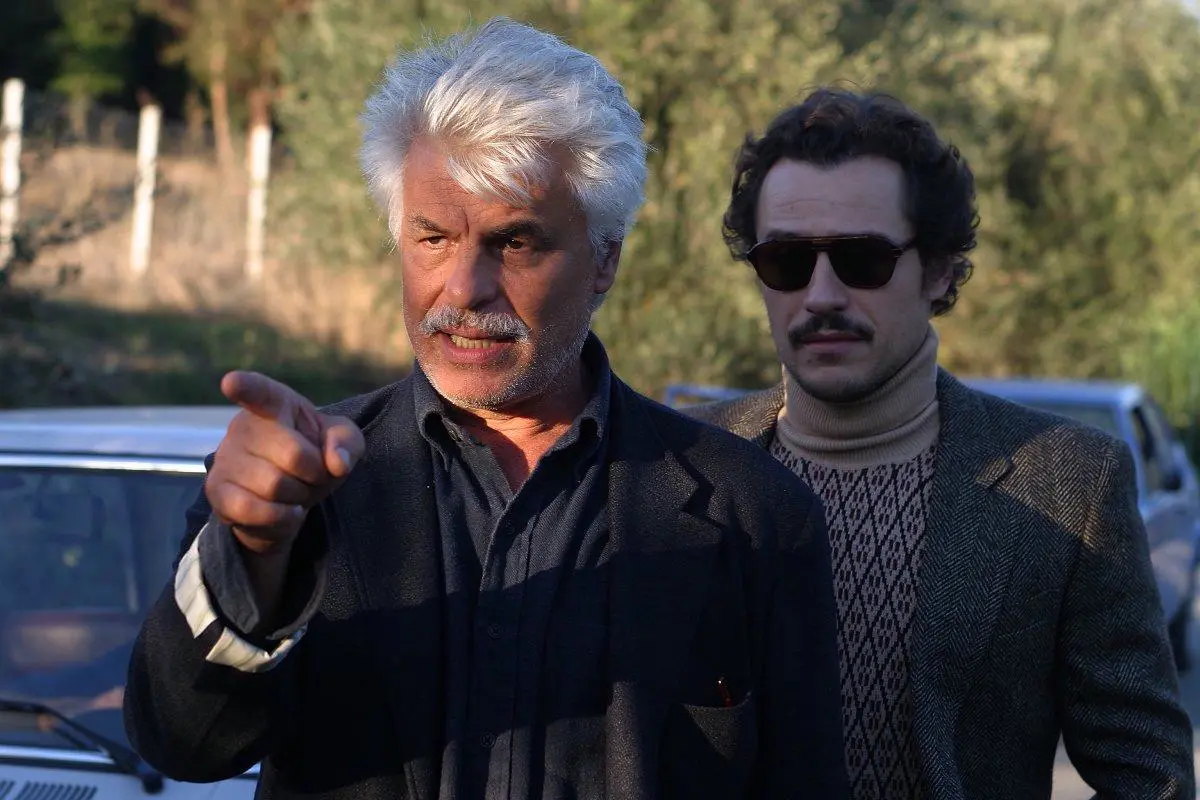
Michele Placido, Stefano Accorsi
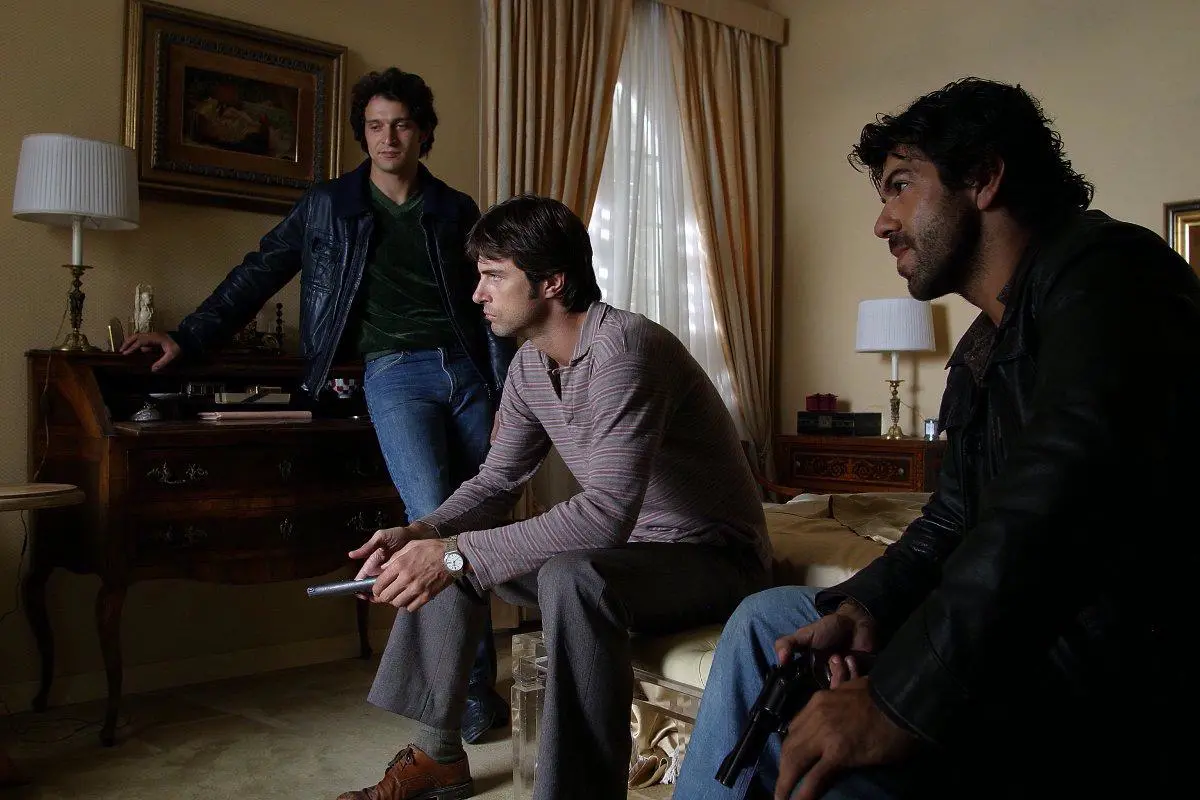
Copyright: Warner Bros
Claudio Santamaria, Kim Rossi Stuart, Pierfrancesco Favino

Cattleya, Babe Films, Warner Bros
Based on the novel of the same title by Giancarlo De Cataldo. The activities of the “Banda della Magliana” and its successive leaders (Libanese, Freddo, Dandi) unfold over twenty-five years, intertwining inextricably with the dark history of atrocities, terrorism and the strategy of tension in Italy, during the roaring 1980’s and the Clean Hands (Mani Pulite) era.
The mention of "v1.3.2 Incl ALL DLC" highlights the modern reality of gaming: the "Live Service" model. Games are no longer static products released on a cartridge; they are evolving ecosystems. Version 1.3.2 represents a specific point in the game’s lifecycle, likely including performance optimizations and the full suite of cosmetic or functional DLC (Downloadable Content) released up to that point. In the context of digital archiving, such files are often sought after to ensure the "complete" version of the game—including all levels, skins, and modes—is preserved for future play.
Tetris Effect: Connected proves that even a forty-year-old formula can feel revolutionary when paired with modern technology and a deep understanding of human psychology. By focusing on "Flow" and "Connection," it transcends the puzzle genre, offering a digital space where players can lose themselves in a symphony of blocks and light. Whether played solo or with others, it remains a testament to the enduring power of Pajitnov’s original vision, polished to a contemporary brilliance.
The title refers to the "Tetris Effect," a real-world phenomenon where players who engage with the game for long periods begin to see falling blocks in their peripheral vision or dreams. Tetris Effect: Connected leans into this psychological immersion. Unlike traditional versions that focus purely on the increasing speed of gravity, this version utilizes music, light, and haptic feedback to synchronize the player’s actions with the environment. Every rotation of a "Tetrimino" and every cleared line adds a beat or a melodic layer to the soundtrack, creating a flow state that many critics have described as "zen-like" or "meditative."
The Evolution of Zen: From Tetris to Tetris Effect: Connected
The history of video games is filled with fleeting trends, yet Tetris remains a singular constant. Since its inception in 1984 by Alexey Pajitnov, the game has undergone countless iterations. However, it was the release of Tetris Effect (and its subsequent expansion, Connected ) that fundamentally redefined how players interact with this classic puzzler by transforming a mechanical exercise into a multisensory emotional journey.
The specific version referenced— Connected —marked a major milestone for the title by introducing robust multiplayer components. The "Connected" mode itself is a cooperative experience where three players must synchronize their gameplay to defeat AI-controlled bosses. This shifted the narrative of Tetris from a solitary struggle against an endless wall of blocks to a communal effort, emphasizing harmony and collective timing.
The mention of "v1.3.2 Incl ALL DLC" highlights the modern reality of gaming: the "Live Service" model. Games are no longer static products released on a cartridge; they are evolving ecosystems. Version 1.3.2 represents a specific point in the game’s lifecycle, likely including performance optimizations and the full suite of cosmetic or functional DLC (Downloadable Content) released up to that point. In the context of digital archiving, such files are often sought after to ensure the "complete" version of the game—including all levels, skins, and modes—is preserved for future play.
Tetris Effect: Connected proves that even a forty-year-old formula can feel revolutionary when paired with modern technology and a deep understanding of human psychology. By focusing on "Flow" and "Connection," it transcends the puzzle genre, offering a digital space where players can lose themselves in a symphony of blocks and light. Whether played solo or with others, it remains a testament to the enduring power of Pajitnov’s original vision, polished to a contemporary brilliance.
The title refers to the "Tetris Effect," a real-world phenomenon where players who engage with the game for long periods begin to see falling blocks in their peripheral vision or dreams. Tetris Effect: Connected leans into this psychological immersion. Unlike traditional versions that focus purely on the increasing speed of gravity, this version utilizes music, light, and haptic feedback to synchronize the player’s actions with the environment. Every rotation of a "Tetrimino" and every cleared line adds a beat or a melodic layer to the soundtrack, creating a flow state that many critics have described as "zen-like" or "meditative."
The Evolution of Zen: From Tetris to Tetris Effect: Connected
The history of video games is filled with fleeting trends, yet Tetris remains a singular constant. Since its inception in 1984 by Alexey Pajitnov, the game has undergone countless iterations. However, it was the release of Tetris Effect (and its subsequent expansion, Connected ) that fundamentally redefined how players interact with this classic puzzler by transforming a mechanical exercise into a multisensory emotional journey.
The specific version referenced— Connected —marked a major milestone for the title by introducing robust multiplayer components. The "Connected" mode itself is a cooperative experience where three players must synchronize their gameplay to defeat AI-controlled bosses. This shifted the narrative of Tetris from a solitary struggle against an endless wall of blocks to a communal effort, emphasizing harmony and collective timing.