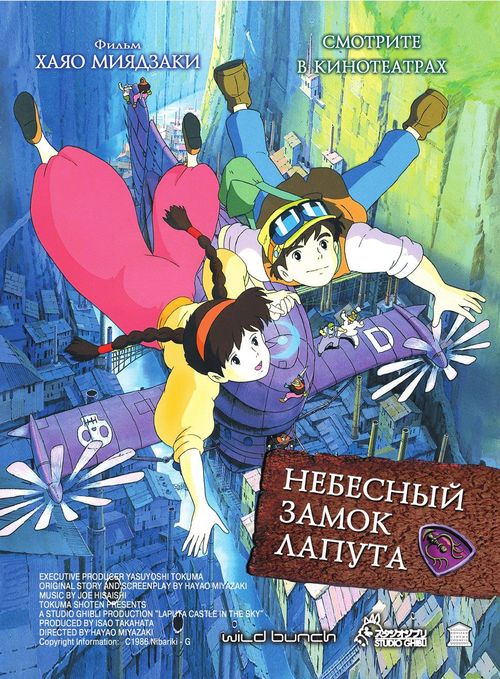
| Производство: | Япония174 |
|---|---|
| Премьера: | 02.08.19867 |
| В россии: | c 28.02.2008 |
| Жанр: | приключения111, сказка33, романтика30, паропанк1 |
| Тип: | Anime159, п/а18, 124 мин. |
| Режиссёр: | Миядзаки Хаяо22 |
| Автор оригинала: | Миядзаки Хаяо22 |
| Студия: | Ghibli16 |
| Видео: | DVDRip Xvid AVI |
| Аудио: | Rus , Rus (ext), JAP (ext)+SUB |
Описание
Альтернативная реальность, находящаяся на уровне технического развития Европы начала XX века (дизельпанк). Лапута, легендарный летающий остров, для одних является сосредоточением огромной военной мощи, для других — несметных сокровищ. Но небесный замок, затерявшийся среди облаков, возможно найти лишь с помощью кристалла Летающего Камня. Юная Сита, носившая талисман, который являлся для неё лишь семейной реликвией, не подозревала об этом, пока за ней и её кристаллом не началась охота. Фильм начинается с нападения воздушных пиратов на дирижабль. Сита срывается и падает вниз, однако волшебная сила талисмана спасает её. Ситу в бессознательном состоянии находит мальчик Пазу из шахтёрского городка. Однако пираты не оставляют надежд завладеть талисманом. Их конкурентами являются военные, которые с помощью талисмана пытаются найти путь на летающий остров Лапута, скрытый в облаках воздушного океана. Военные захватывают Ситу в плен. Талисман случайно возвращает к жизни ужасного боевого робота, и Сита с помощью Пазу бежит из крепости. У военных остается талисман, который ведет их дирижабль «Голиаф» к Лапуте. Их преследуют пираты, на сторону которых встают Пазу и Сита. Во главе военных оказывается Муска — один из потомков властителей Лапуты (дальний родственник Ситы), который мечтает с помощью талисмана и острова завладеть миром.



"Lale Qizim" is more than just a melody; it is a cultural bridge. It connects the poetic traditions of the past with the digital habits of the present. When someone searches to download this track, they aren't just looking for audio—they are seeking to capture a piece of heritage that honors the beauty and importance of the daughter in the family unit.
The phrase "Yukle" (Download) reflects how traditional culture survives in the digital age. While the song's roots may be decades old, its popularity persists on platforms like YouTube, Spotify, and MP3 portals. Whether it is the classic rendition or a modern cover, the act of "downloading" the song is often the first step in preparing for a family celebration or creating a personal playlist that feels like home. Conclusion
In Azerbaijani society, music is the vessel for storytelling and emotional expression. This song is frequently played at weddings, birthdays, and "Henna Nights," serving as a soundtrack for pivotal life transitions. It often evokes a sense of "sweet sorrow"—celebrating a daughter's growth while acknowledging the bittersweet reality that she will one day start a life of her own. The Modern Digital Context
At its core, "Lale Qizim" is a lyrical tribute to the bond between a parent and a daughter. The tulip ( Lale ) is a significant symbol in Azerbaijani poetry and art, representing beauty, innocence, and the fleeting nature of youth. By calling a daughter "Lale," the lyrics elevate her to a symbol of natural grace and a source of familial pride. Cultural Significance
"Lale Qizim" (My Tulip Daughter) is one of the most cherished and soulful songs in Azerbaijani music culture. To understand the phrase "Lale Qizim Yukle" (Download Lale Qizim), one must look beyond the digital search for a file and into the deep emotional resonance the song holds for families across the region. The Heart of the Song