It looked like a trap. It felt like a betrayal of the precision he lived by. But desperation has a way of making the jagged edges of a risk look like a smooth path forward. He clicked the link.
The silence in the shop was now absolute. He realized then that in trying to bypass the cost of the tool, he had destroyed the machine itself.
He ran the executable. His antivirus flared a red warning—a digital fever—but he silenced it. He watched as the "crack" patched the heart of the software, rewriting the digital DNA of the program to believe it was paid for, legitimate, and whole.
The software launched. The splash screen remained on his monitor longer than usual, a ghost in the machine. Then, the interface bloomed. It looked perfect. He imported his CAD files, set the toolpaths, and generated the G-code.
The spindle spun up to 12,000 RPM—a scream of power. The carbide end mill descended toward the block of aerospace-grade aluminum. Clang. It wasn't a cut. It was a collision.
Elias slammed the E-stop, but the damage was done. The spindle was misaligned, the table scarred, and the expensive part was a jagged hunk of scrap.
The machine didn't follow the curve. The "crack" hadn't just bypassed the license; it had corrupted the post-processor logic. The tool plunged straight through the workpiece and into the hardened steel table. Sparks showered the cabin. The sound of shattering carbide filled the room like a gunshot.
He leaned into the glow of a forum thread buried deep in the indexed web. The header screamed in jagged, low-res fonts:
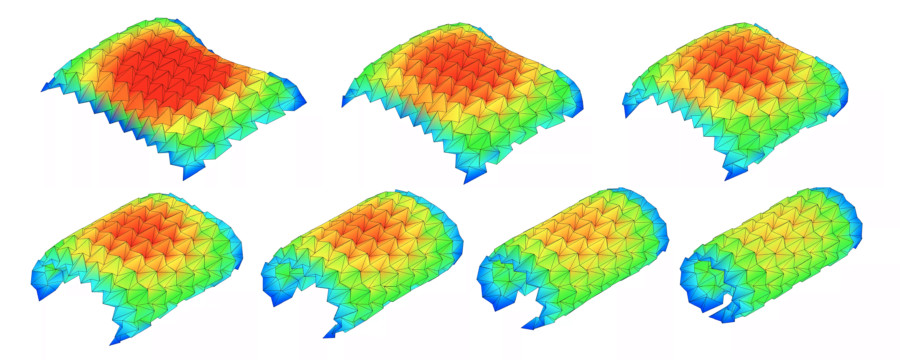
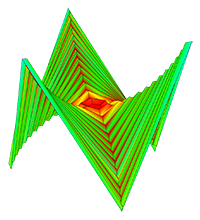
STRAIN VISUALIZATION
Cauchy strain or engineering strain is a unitless measurement of how much a material is being stretched or compressed under load.
The Strain Visualization illustrates the strain across an origami sheet by mapping it to a color from blue (no strain) to red (max strain).