HD Videos always in sync
Video players never go out of sync with our cutting edge technology, even across different episode. So binge watch party TV shows in single watch party.
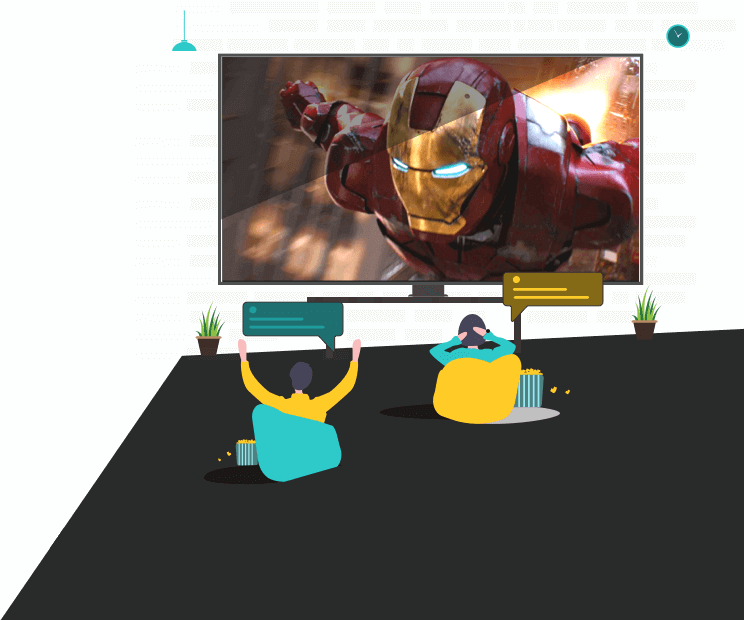
Start playing video on Netflix or other supported platforms.
Once video starts playing, click the Flickcall logo visible on top right to start watch-party (visible for 10 sec). You can also start party from Flickcall icon on chrome toolbar.
Click start party and copy invite link. Send the invite link to anyone to join your watch party.










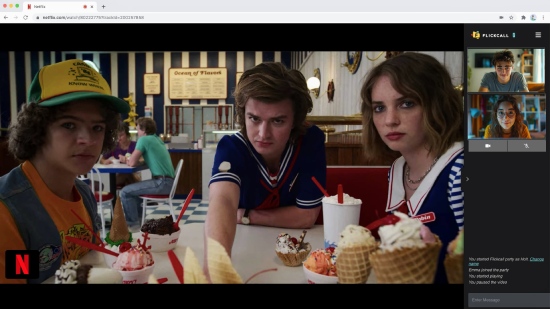
Create watch parties on Netflix, Disney+, JioHotstar, JioHotstar, HBO Max, MAX, Hulu, Prime Video, Youtube, Zee5, Sony Liv, JioHotstar with Flickcall.

Video players never go out of sync with our cutting edge technology, even across different episode. So binge watch party TV shows in single watch party.

Watch your friends laughing with you, Emotions shared in real-time. This is the next best thing after being together.

After installing extension, play the video and click Flickcall logo at top right to start party. Easy-peasy!!
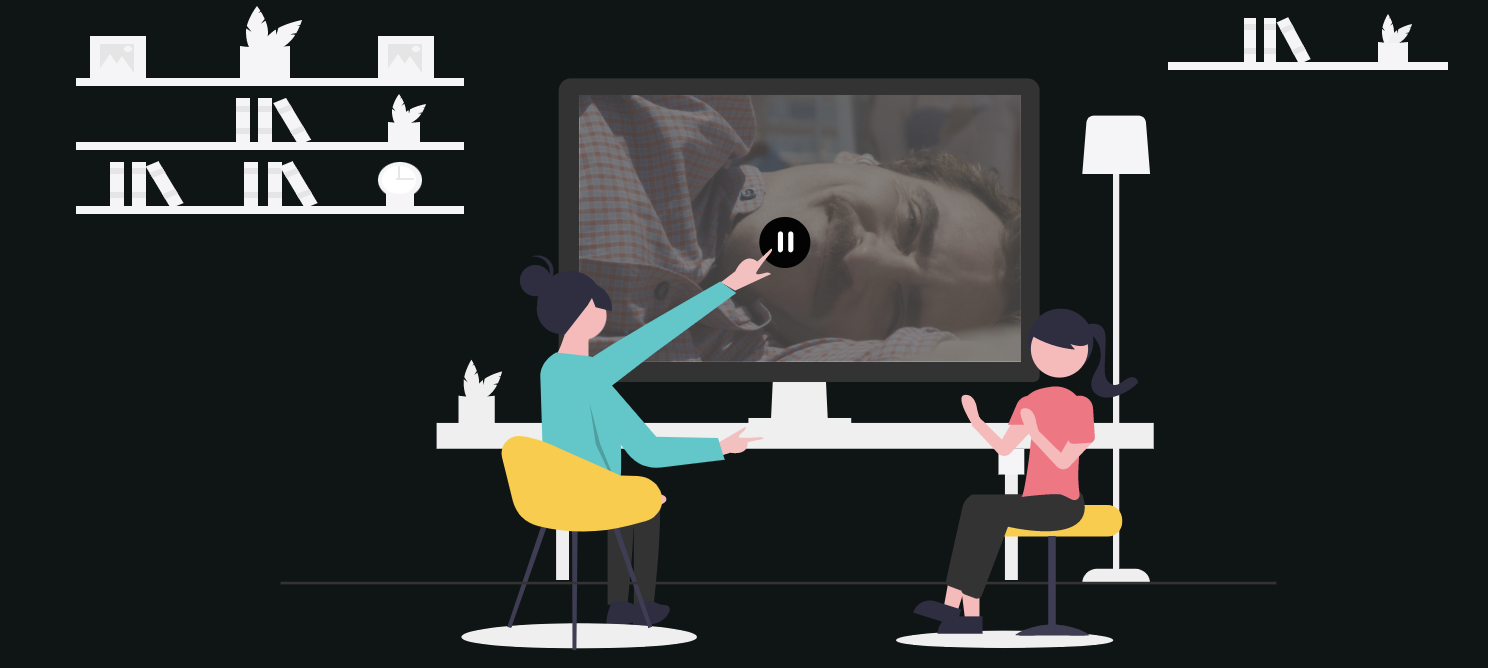
Mic is muted automatically during video play and activated whenever video is paused to engage in seamless conversations. So hit pause and start speaking.
Our peer to peer technology delivers your personal chats and calls directly to your friends instead of the traditional approach of routing it via servers.
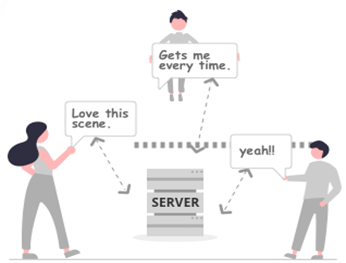
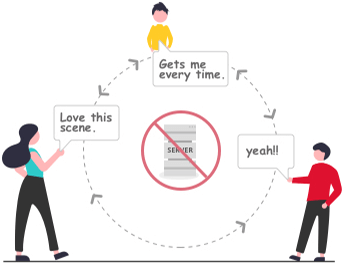
* In some cases, firewall setting doesn't allow direct connection, the calls and messages are encrypted and routed via our servers.
Central to the novel’s exploration is the concept of collective intelligence versus individual consciousness. Werber highlights the "social stomach" and chemical communication of the ants as a form of biological internet—a selfless, instantaneous exchange of information that allows the colony to function as a single "supra-organism." This stands in stark contrast to the human characters, who struggle with isolation, secrets, and the limitations of spoken language. Through the excerpts of the fictional Encyclopedia of Relative and Absolute Knowledge interspersed throughout the text, Werber challenges the reader to consider whether the human obsession with the "I" is actually a weakness compared to the ants' commitment to the "We."
Ultimately, Bernard Werber’s Les Fourmis is a call to bridge the gap between species. It suggests that the survival of life on Earth may depend on our ability to recognize and learn from non-human intelligences. By the novel’s end, the ants are no longer just insects; they are a mirror reflecting our own societal flaws and potential. Werber successfully transforms a backyard nuisance into a source of wonder, proving that the most alien civilizations are often those closest to home.
Furthermore, Les Fourmis serves as a humbling critique of human perception. The "Intra-Terrestrials," as Werber calls them, inhabit a world where a raindrop is a lethal projectile and a human foot is an incomprehensible natural disaster. By inviting readers into the sensory world of the ant—relying on scent and vibration rather than sight—Werber breaks the "human-centric" lens. This displacement encourages a philosophical humility; it suggests that our understanding of reality is limited by our biology, and that other forms of "truth" exist in the micro-realms we often ignore.